
Radon Mitigation Project Case Study: Commercial Large Building
Missouri Department of Conservation Headquarters Building
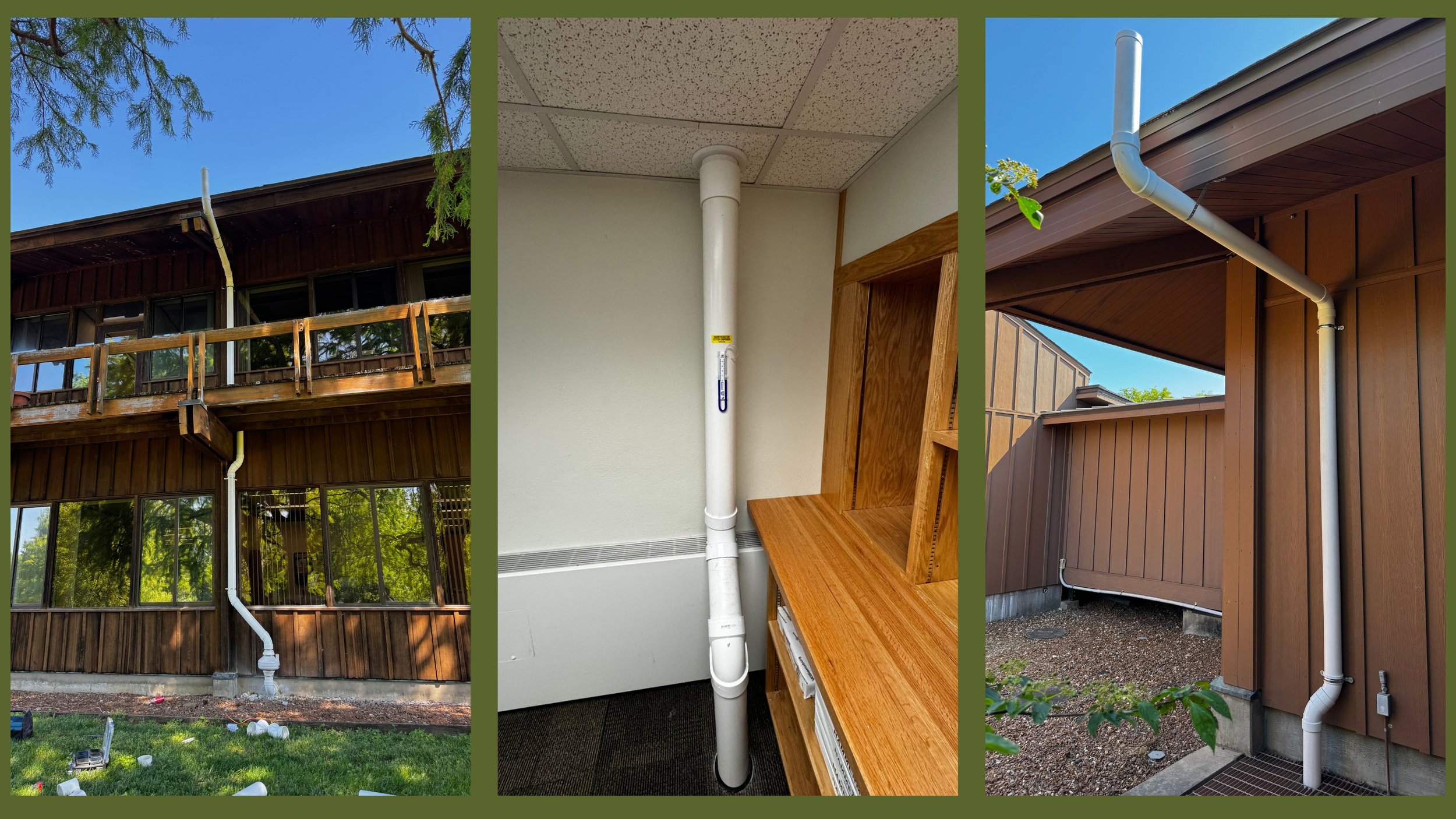
Commercial and large-building radon mitigation requires more than a standard residential approach. Larger foundations, complex slab systems, and varying pressure conditions demand careful system design, diagnostic testing, and adherence to recognized industry standards.
Recently, our team completed a radon mitigation project for the Missouri Department of Conservation Headquarters Building, where the primary objective was to establish effective sub-slab depressurization and long-term radon reduction performance throughout the structure.
Project Overview
The Missouri Department of Conservation Headquarters presented unique challenges that are common in commercial and institutional buildings. Unlike smaller residential projects, large-building mitigation systems must account for:
Greater slab coverage areas
Variable soil and sub-slab conditions
Multiple pressure zones
Mechanical system interactions
Long-term operational reliability
To address these conditions, the system was designed and installed in accordance with the ANSI/AARST SGM-MFLB standard (Soil Gas Mitigation in Multi-family and Large Buildings). These standards provide nationally recognized guidelines for commercial radon mitigation system design, installation, diagnostics, and performance verification.
Diagnostic Testing and Pressure Field Extension
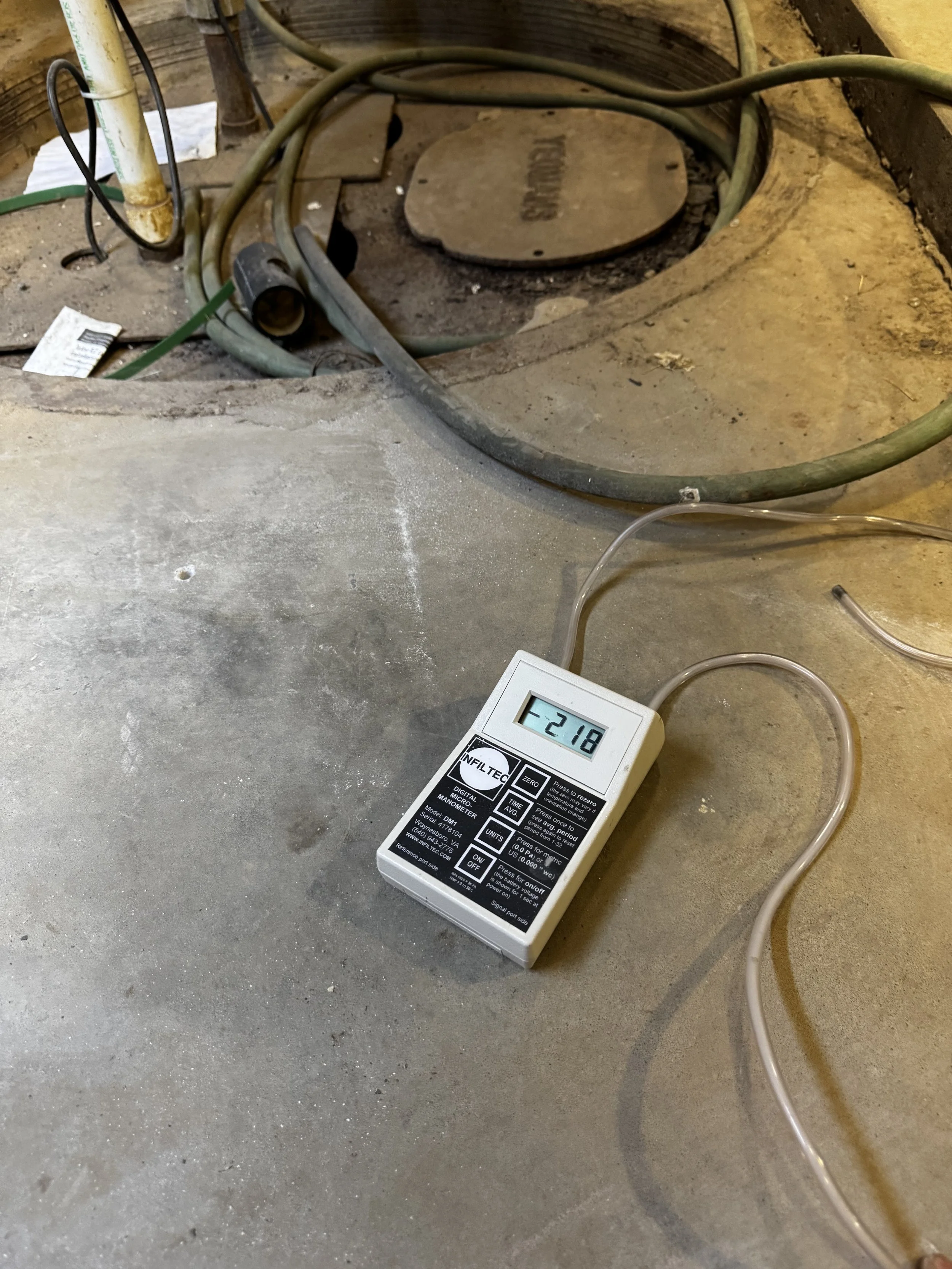
One of the most important components of a successful radon mitigation system is achieving proper Pressure Field Extension (PFE).
Pressure Field Extension refers to the ability of the mitigation system to create negative pressure beneath the slab across the required treatment area. In practical terms, this means the system can effectively pull soil gases (including radon) from beneath the building before they enter occupied spaces.
During this project, diagnostic testing was performed to verify that the installed system was creating adequate communication beneath the slab.
The results demonstrated effective sub-slab pressure extension, confirming that the mitigation system was successfully influencing the intended areas below the building foundation.
This verification process is critical in commercial mitigation projects because system effectiveness cannot simply be assumed based on fan installation alone. Proper diagnostics help ensure the system is performing as designed and capable of maintaining long-term radon reduction.
System Design and Installation
This particular mitigation system utilized active sub-slab depressurization, which is considered the most effective and widely accepted method for radon reduction in both residential and commercial structures.
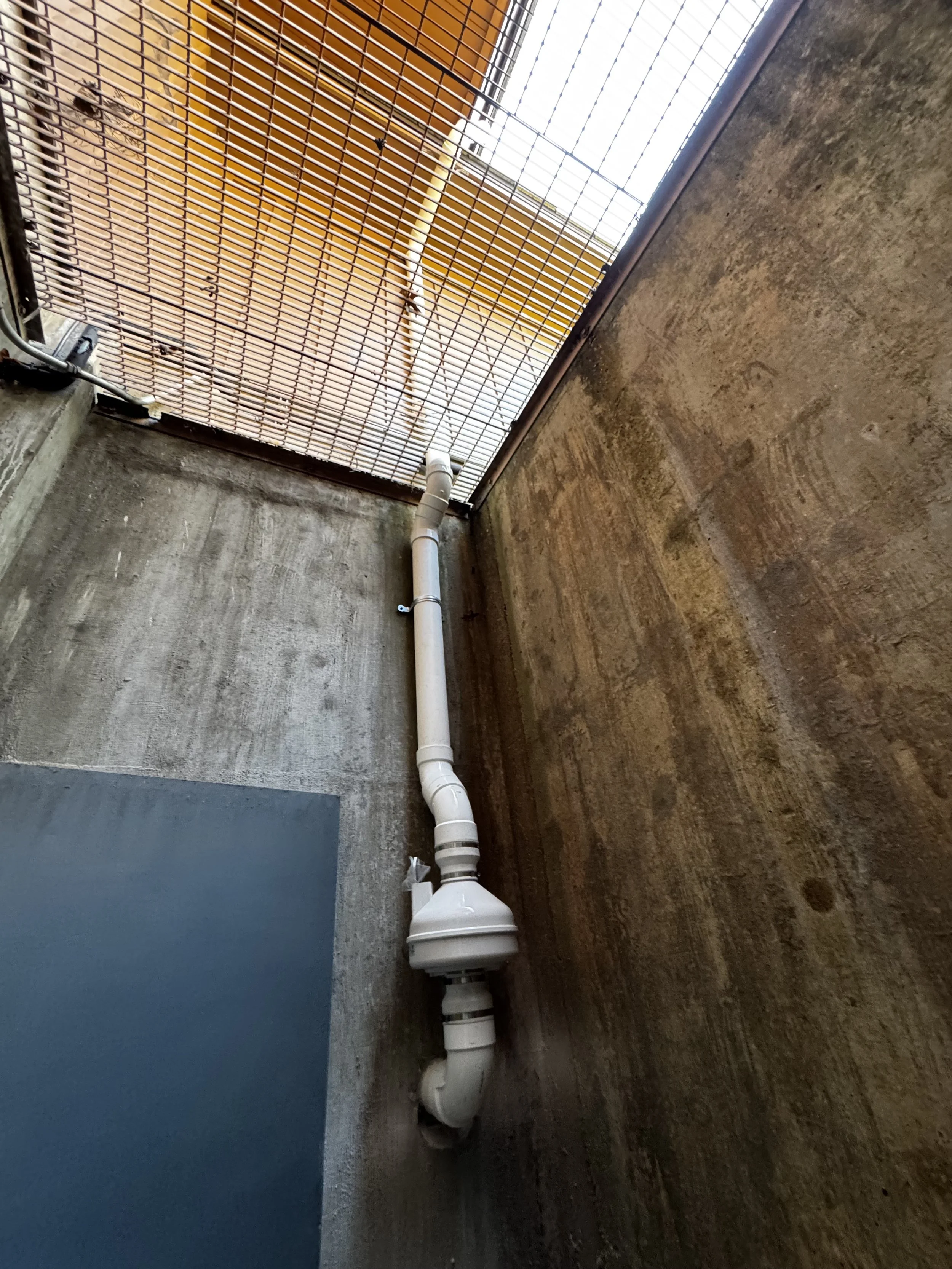
The system operates by:
Creating negative pressure beneath the slab
Capturing radon-containing soil gas before it enters the building
Venting those gases safely above the roofline
Commercial projects often require careful balancing between airflow, suction, and building conditions. Fan sizing, pipe routing, slab communication, and system monitoring all play important roles in overall system performance.
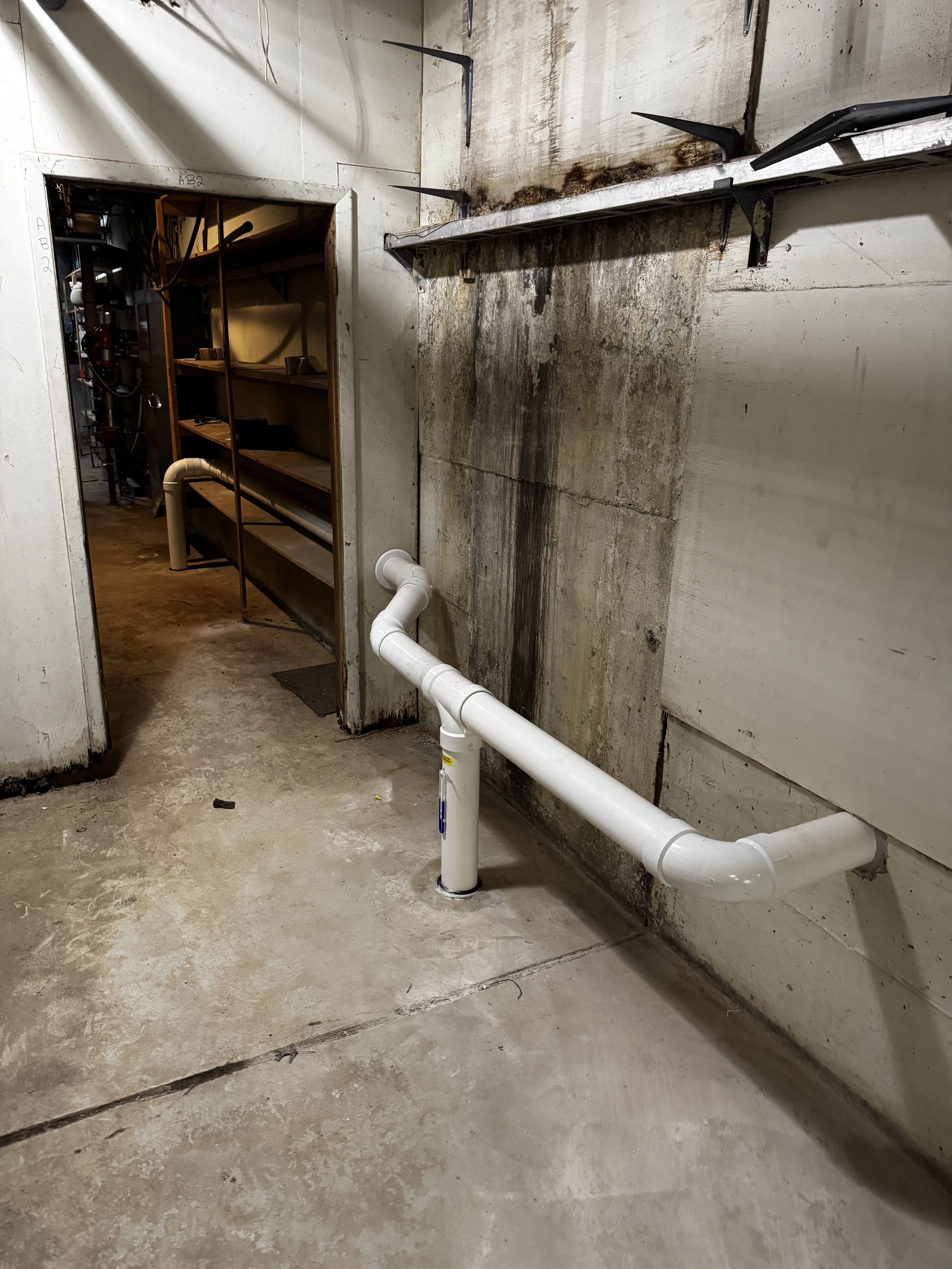
For this project, special attention was given to:
Maintaining consistent sub-slab vacuum pressure
Optimizing system airflow
Minimizing disruption to building operations
Verifying pressure communication throughout the treatment area
The completed installation provides continuous active mitigation designed to operate safely and reliably over the long term.
Importance of Commercial Radon Mitigation
Radon is a naturally occurring radioactive gas produced by the breakdown of uranium in soil. Because it is colorless, odorless, and invisible, elevated radon levels can go undetected without proper testing.
While radon is commonly discussed in residential settings, commercial and institutional buildings are equally susceptible to elevated levels. Large buildings can experience significant radon entry through:
Slab penetrations
Expansion joints
Utility openings
Cracks in concrete slabs
Differential pressure conditions within the structure
Mitigation in commercial environments requires specialized knowledge and a system designed specifically for the building’s construction characteristics and occupancy requirements.
By implementing a properly engineered mitigation system, building owners can significantly reduce radon exposure risks while supporting healthier indoor air quality for employees, visitors, and occupants.
Final Outcome
The completed mitigation system successfully established effective sub-slab depressurization and demonstrated proper Pressure Field Extension throughout the designated mitigation area.
By combining diagnostic testing, standards-based design, and professional installation practices, the project achieved a reliable commercial radon mitigation solution for the Missouri Department of Conservation Headquarters Building.
As awareness of indoor air quality and radon exposure continues to grow, properly engineered mitigation systems remain an essential component of safe and healthy commercial building environments.
For more information and a link to our sources, visit AARST.org for access to the standard booklet.
If you are searching for a commercial radon testing or mitigation specialist, give us a call and speak with Devin!
Devin McDowell
Clear Radon Owner, Certified Radon Measurement and Mitigation Specialist417-849-4729